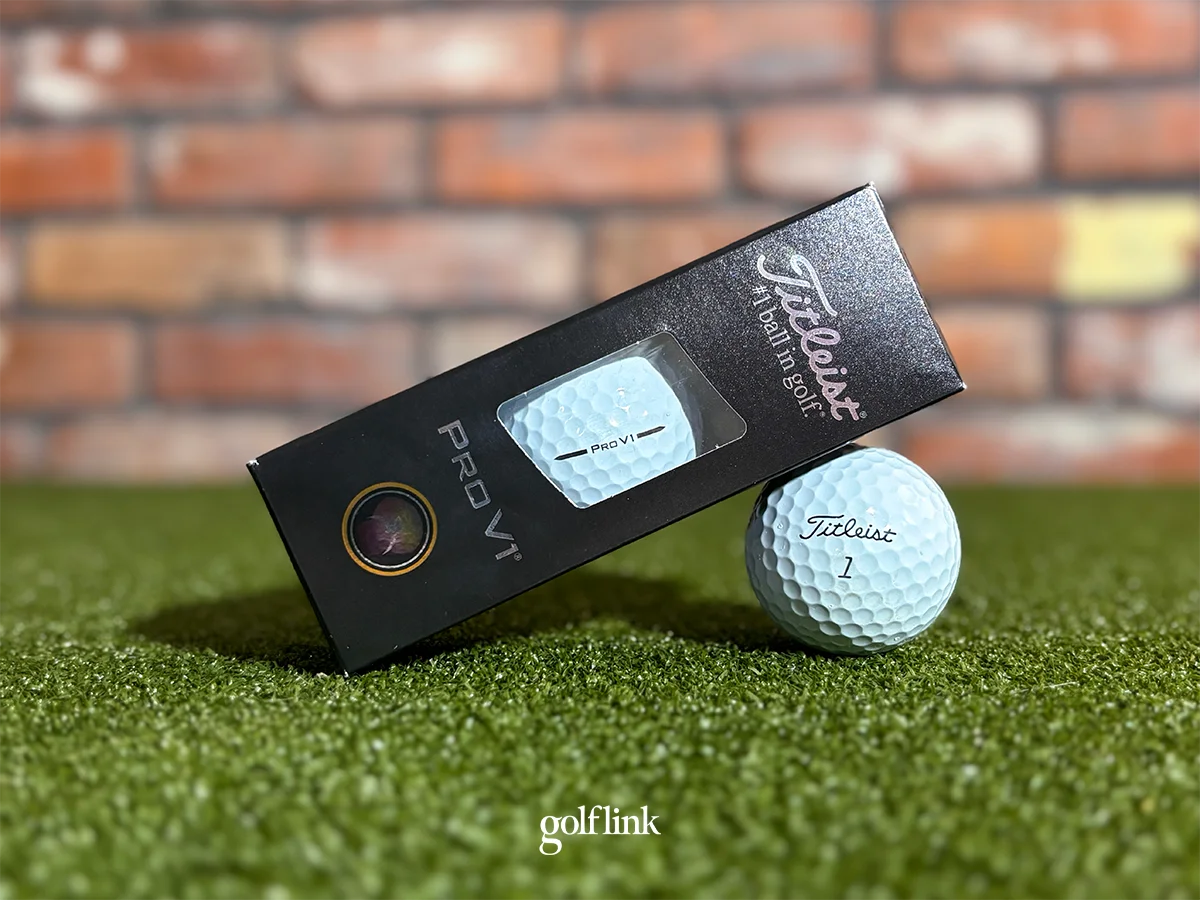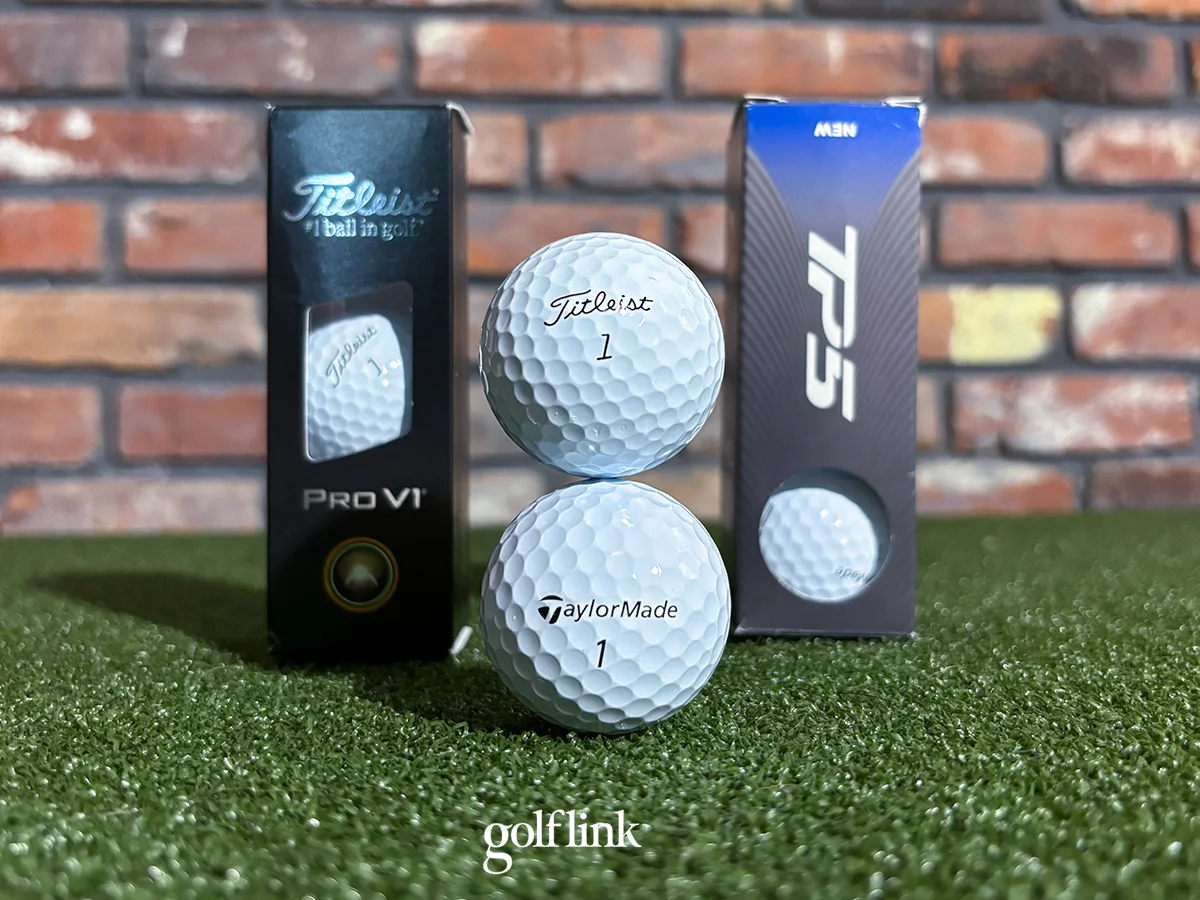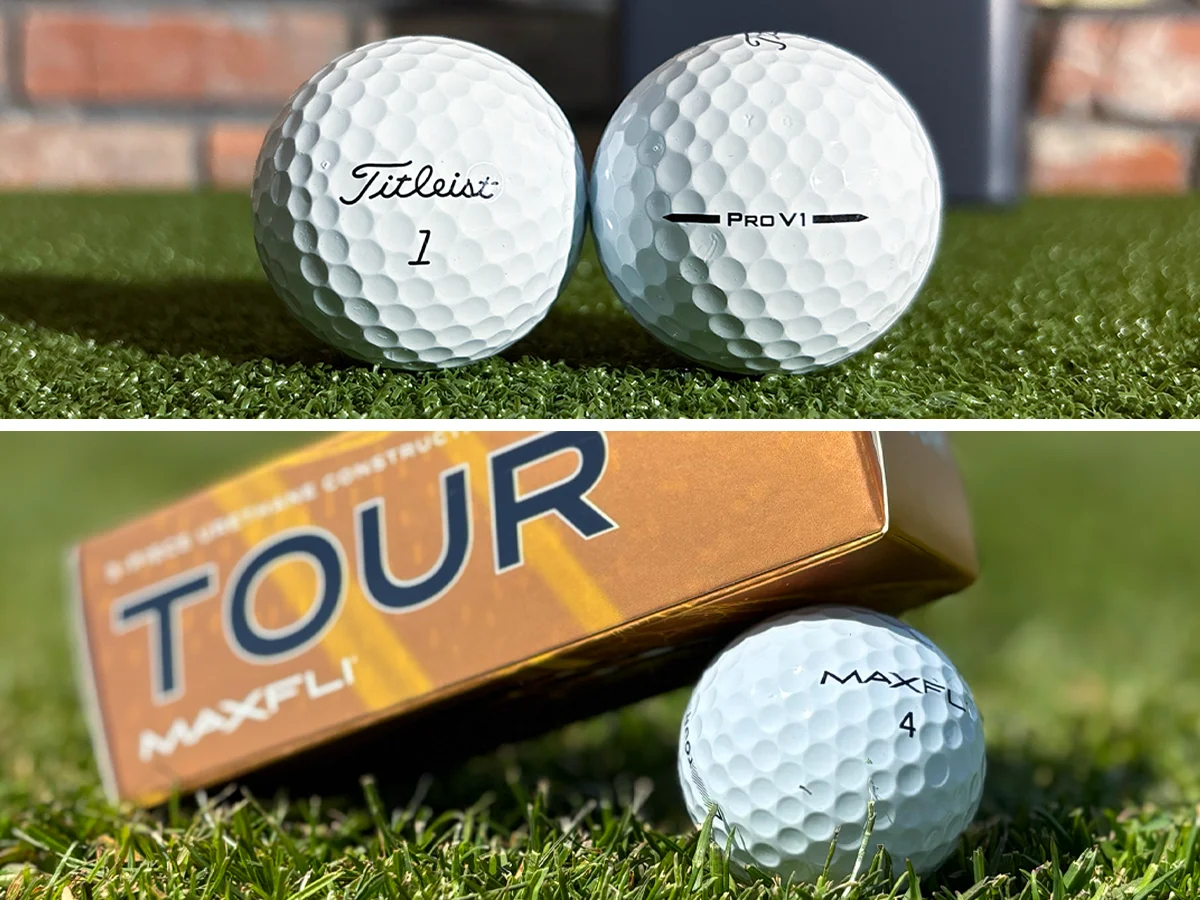
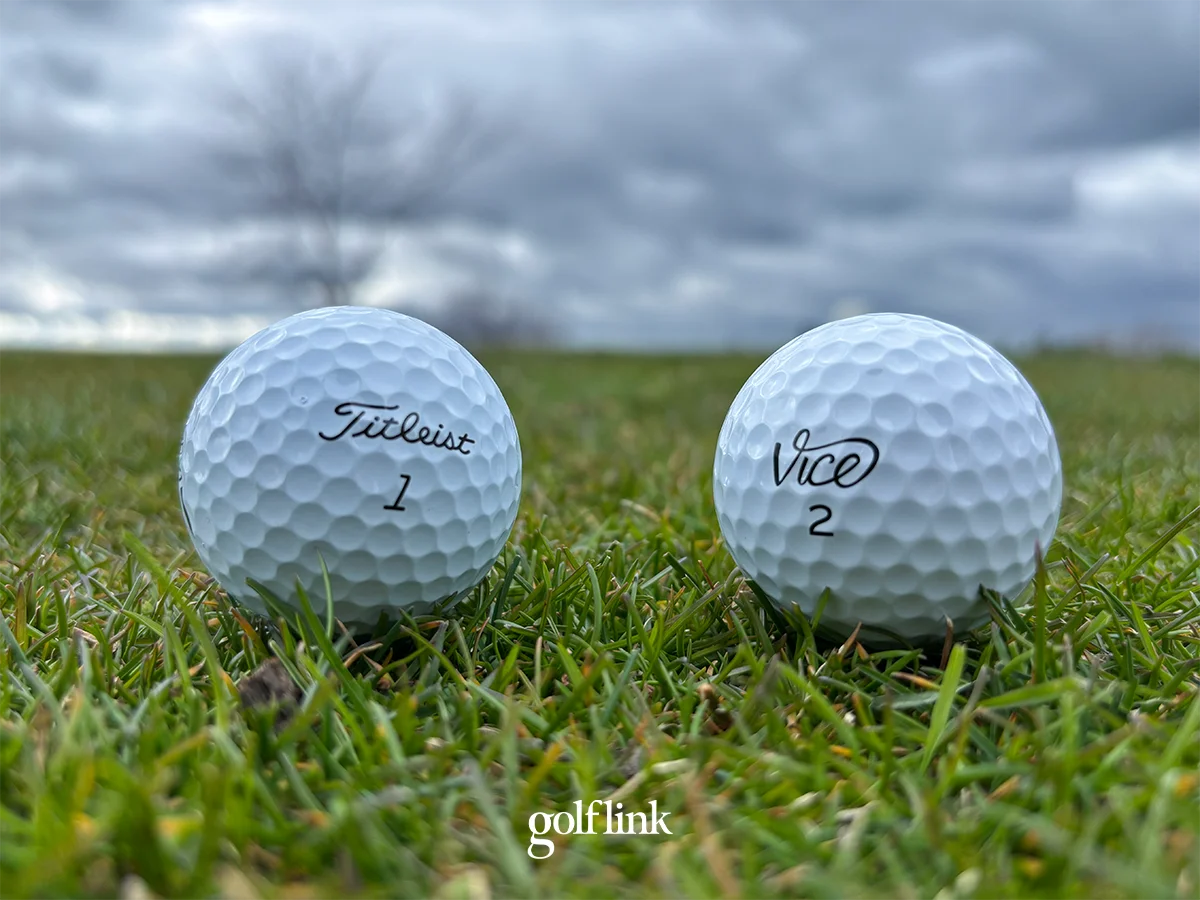
Vice Pro is about $20 per dozen cheaper than the Titleist Pro V1.
On paper, the two balls are pretty much identical: three-piece, urethane-covered balls marketed to serious golfers chasing premium performance.
So is Pro V1 actually worth paying 40% more, or have golfers been paying a brand tax for decades?
How We Tested Pro V1 & Vice Pro Golf Balls
We tested both the Titleist Pro V1 and Vice Pro using our standardized golf ball testing protocol on the SkyTrak ST Max launch monitor.
We use human swings, not robots, so our testing reflects the performance differences that most golfers can actually expect to see on the course, not microscopic variances under perfect conditions.
We use strict guardrails for swing speed and ball speed, delivery dynamics (face and path) and shot quality (strike location and smash factor) to ensure our results represent as much of the golf ball’s performance, and as little of the golf swing, as possible. These benchmarks also keep our results consistent across every ball we test.
While individual results will vary, the patterns we see across dozens of shots are meaningful.
Learn more about how we test golf balls and see the complete list of every golf ball we’ve tested.
You can also check out our full Titleist Pro V1 test data here and our Vice Pro test data here.
Pro V1 vs Vice Pro Overview
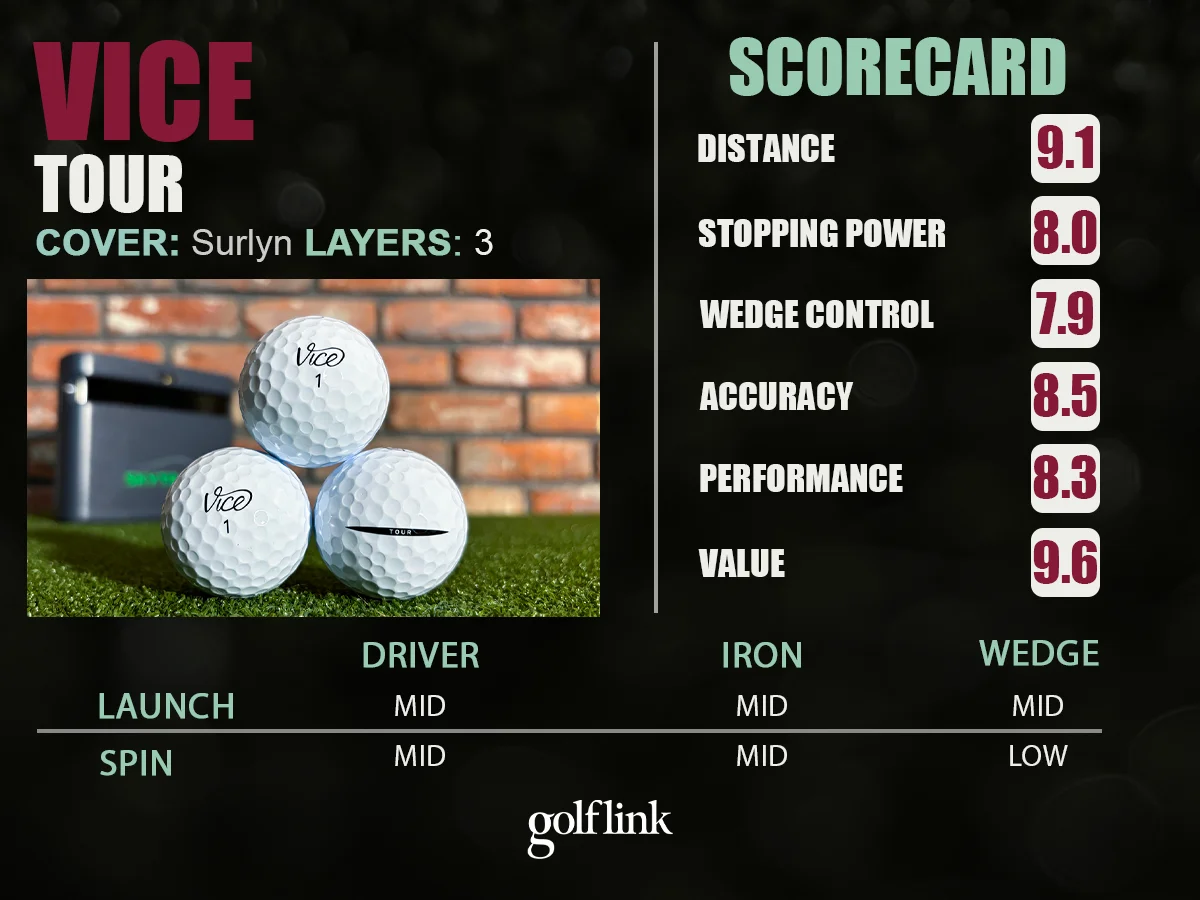
A quick high-level comparison between Titleist Pro V1 and Vice Pro doesn’t reveal many differences. They’re both three-piece balls with cast urethane covers. In other words, they’re made for golfers who prioritize greenside spin and control.
| Category | Titleist Pro V1 | Vice Pro |
| Cover | Urethane | Urethane |
| Layers | 3-piece | 3-piece |
| Brand Description | Extraordinary distance; increased drop-and-stop control; very low long game spin; penetrating trajectory | Balance of distance and control; slightly lower trajectory; longer distance with woods and irons |
| Price | $58 | $39 / $34 bulk (6 dozen) |
Vice Golf is one of the original direct-to-consumer golf brands. Cutting out the middle man allows Vice to offer premium performance and significant savings, especially when you buy in bulk.
Titleist, of course, has been the gold standard of golf balls for as long as most of us can remember. Pro V1 consistently ranks as one of the most-played balls among tour professionals. Players whose careers depend on squeezing every fraction of a stroke out of every part of their games trust it more than virtually any other ball. It’s hard to overstate that fact.
We’re here to see what performance differences live in that price gap, and help you decide whether or not they might impact your game.
Ball Flight Comparison
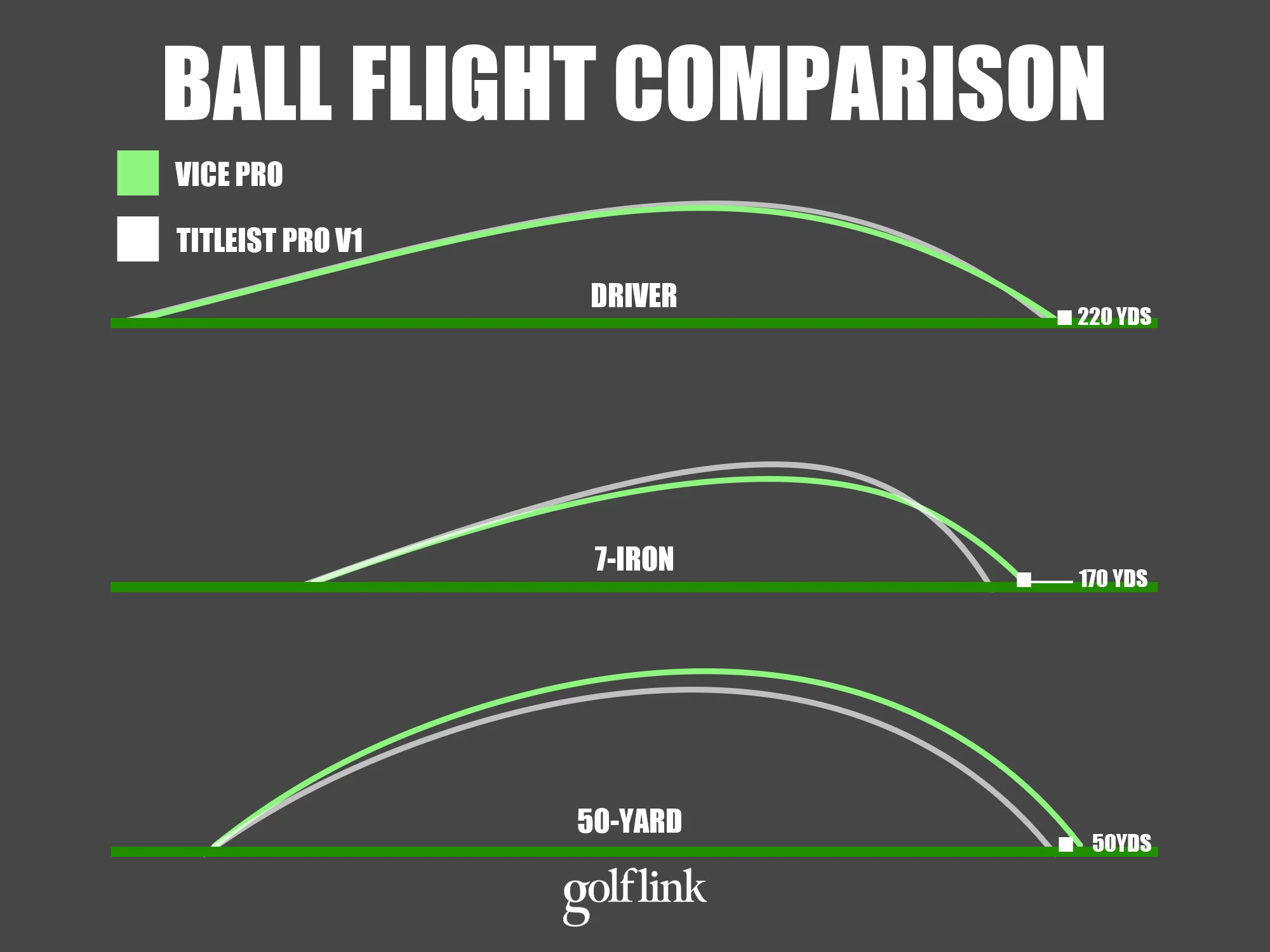
Titleist Pro V1 and Vice Pro showed us different ball flight patterns across our testing. With the full-swing clubs – driver and 7-iron – Pro V1 launched and peaked higher and landed steeper. Those differences were more subtle with the driver, where Vice Pro eked out about four more yards of distance compared to Pro V1.
Those differences became more pronounced as we moved into our 7-iron test. Vice Pro launched about two degrees lower than Pro V1, and carried about eight yards farther. Vice Pro’s flatter ball flight benefits players seeking longer distance with woods and irons – which backs up Vice’s claims – but players who prioritize maximum stopping power will get an advantage by opting for Pro V1.
Check out how the Pro V1 and Vice Pro’s launch and spin profiles compare across our testing.
| Category | Titleist Pro V1 | Vice Pro |
| Driver Spin | High | Low |
| 7-Iron Spin | High | Low |
| Wedge Spin | Mid | Mid |
| Driver Launch | Mid | Mid |
| 7-Iron Launch | High | Mid |
| Wedge Launch | Mid | Mid |
Our driver test between Titleist Pro V1 and Vice Pro was fascinating.
The two balls actually produced identical ball speed and launch angles, both clocking 136 MPH and launching at 14.1 degrees.
The distance gap came down to spin. Vice Pro spun 342 RPM less in our test, which created one extra yard of carry distance and four more yards of total distance.
If your swing produces low spin already, that gap narrows. Pro V1 isn’t a short ball, it just spins more. Whether that hurts or helps your distance depends on where your current spin numbers already live.
| Category | Titleist Pro V1 | Vice Pro |
| Driver Carry (Yds) | 217.3 | 218.3 |
| Driver Total (Yds) | 236.7 | 241.5 |
| Distance Score | 6.4 | 7.7 |
Stopping Power
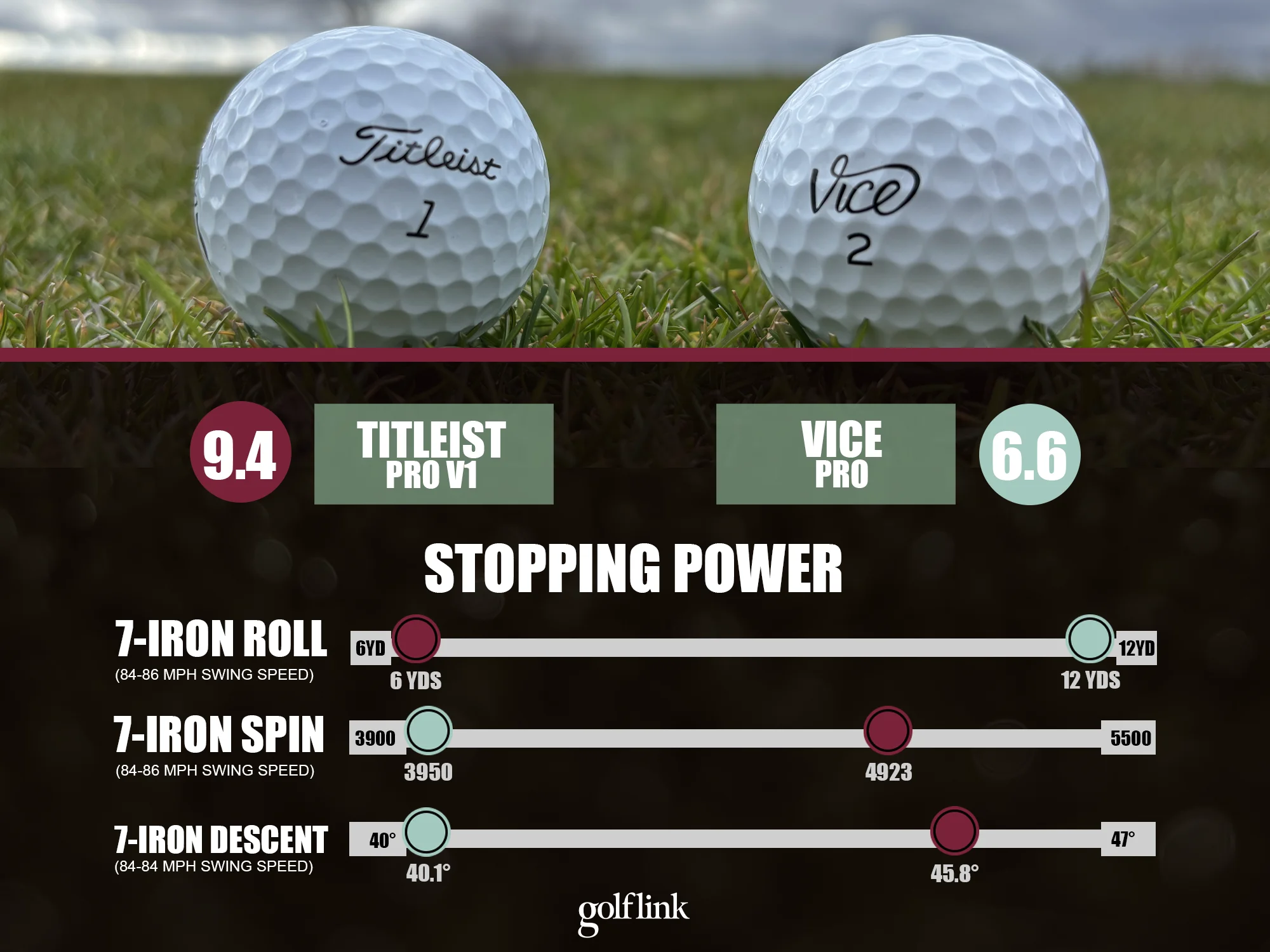
In a word, Pro V1’s stopping power is dominant.
For better players, stopping power equals control, and this category demonstrates exactly why pros choose Pro V1 more than any other ball.
In our testing, Titleist Pro V1 stopped quicker than Vice Pro thanks to convincing advantages in each of the areas that determine stopping power: spin, apex and descent angle.
In our 7-iron test, Pro V1 generated about 1,000 RPM more spin, peaked nearly 12 feet higher, and landed more than five degrees steeper.
This alone is enough to explain why Pro V1 is so popular on tour. It didn’t just destroy Vice Pro in the stopping power competition, it’s among the (if not the) very best in this category overall.
The other side of that coin is distance. Vice touts the Pro for longer distance with irons. Less stopping power equals more distance, and for the average 12-handicapper, that decision isn’t so black and white. Yes, Pro V1’s stopping power is elite, but it’s not free, and not every golfer needs to pay for it.
| Category | Titleist Pro V1 | Vice Pro |
| 7-Iron Roll (Yds) | 6.4 | 12.3 |
| 7-Iron Spin (RPM) | 4923 | 3950 |
| 7-Iron Apex (Yds) | 27.8 | 23.9 |
| 7-Iron Descent Angle | 45.8° | 40.1 |
| Stopping Power Score | 9.4 | 6.6 |
Vice Pro mimicked Titleist Pro V1 performance in wedge control better than any other category in our testing.
The fractional differences in launch, spin and roll in our testing are too small to notice on the course.
If wedge performance is a top priority, you won’t be making any sacrifices in that area by opting for the budget ball.
| Category | Titleist Pro V1 | Vice Pro |
| 50-Yard Launch | 32.6° | 32.8° |
| 50-Yard Spin (RPM) | 6798 | 6758 |
| 50-Yard Roll (Yds | 2.0 | 2.3 |
| Wedge Control Score | 8.8 | 8.6 |
Accuracy
Accuracy is arguably the one area where Vice Pro shoppers and Pro V1 shoppers differ the most.
That’s because the opposite of accuracy isn’t inaccuracy in this context, it’s workability. And the players who are likely to spend more to gain stopping power control are also more likely to prefer workability over accuracy than the average mid-handicap bargain hunter.
The offline numbers don’t always mirror the sidespin numbers because a push or pull typically finishes farther offline than a draw or fade, even with less sidespin. That’s why we weight both equally to calculate our accuracy scores.
So, while these balls’ accuracy scores are noticeably different, they both actually do what their target audience expects. Vice Pro is one of the best in the business as resisting sidespin with both the driver and 7-iron in our testing. Pro V1 is more responsive to shot shaping.
| Category | Titleist Pro V1 | Vice Pro |
| Driver Sidespin (RPM) | 246 | 46 |
| Driver Offline (Yds) | 9.0 | 12.3 |
| 7-Iron Sidespin (RPM) | 64 | 123 |
| 7-Iron Offline (Yds) | 6.5 | 10 |
| Accuracy Score | 7.4 | 9.4 |
Overall Performance
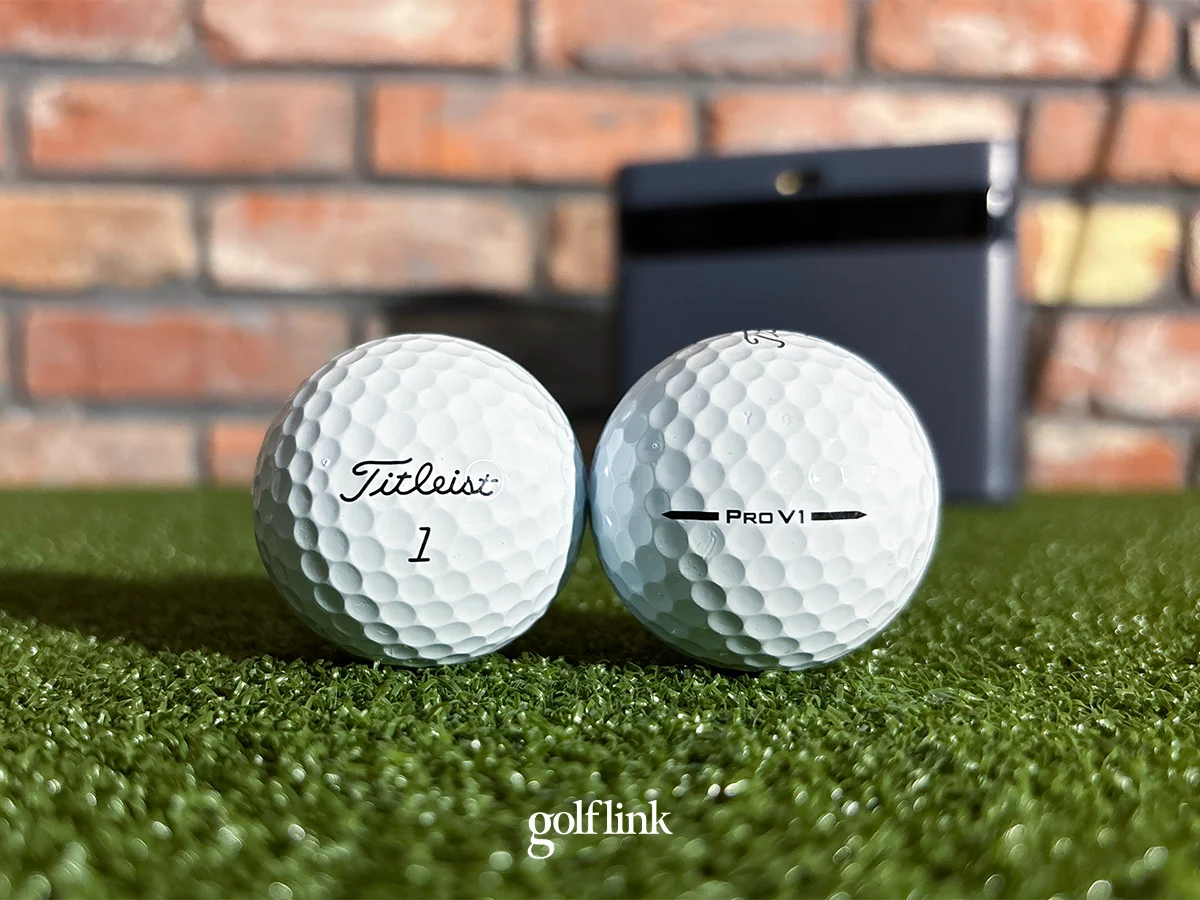
Our overall performance score is a combination of each ball’s Distance, Stopping Power, Wedge Control and Accuracy scores.
When you add it all up, Vice Pro makes a strong case, but Titleist Pro V1 comes out ahead.
Titleist Pro V1’s dominant stopping power and well-rounded overall performance are not only why it was successful in our testing, but why it’s a stalwart among the world’s best players.
| Category | Titleist Pro V1 | Vice Pro |
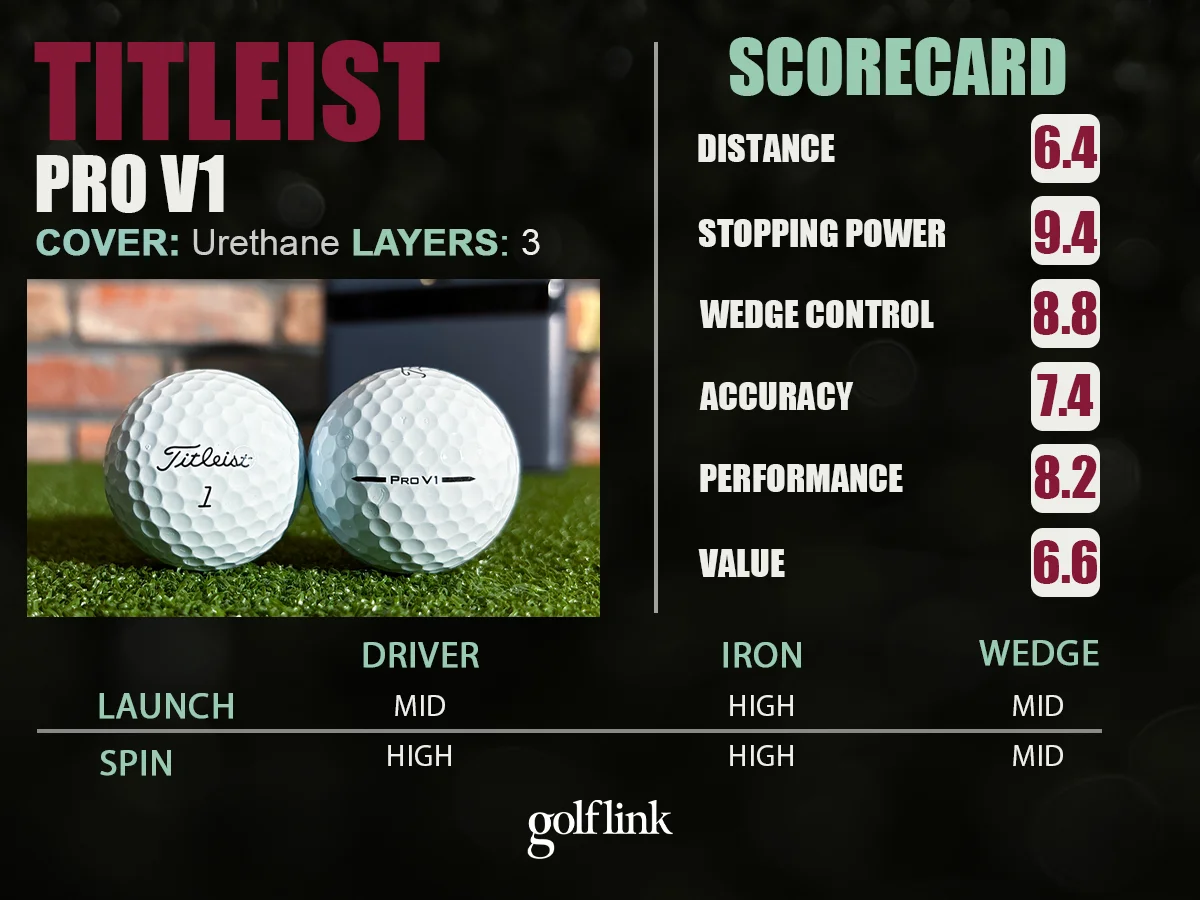
| Distance | 6.4 | 7.7 |
| Stopping Power | 9.4 | 6.6 |
| Wedge Control | 8.8 | 8.6 |
| Accuracy | 7.4 | 9.4 |
| Overall Performance | 8.2 | 7.8 |
Which Ball Should You Choose?
It’s clear that Titleist’s steep asking price for the Pro V1 is more than just a brand tax.
Pro V1 offers undeniable performance benefits that Vice Pro can’t match. But they’re not all benefits that every golfer wants, and they’re certainly not benefits that every golfer needs to pay a premium for.
- If you demand elite control from tee to green, it’s worth paying extra for Pro V1.
- If you prioritize distance, accuracy and wedge control over stopping power (not to mention value) and workability, Vice Pro delivers.
It’s no surprise that Pro V1 tallied a higher overall score than Vice Pro, but the best ball for your game isn’t always the one with the highest score.