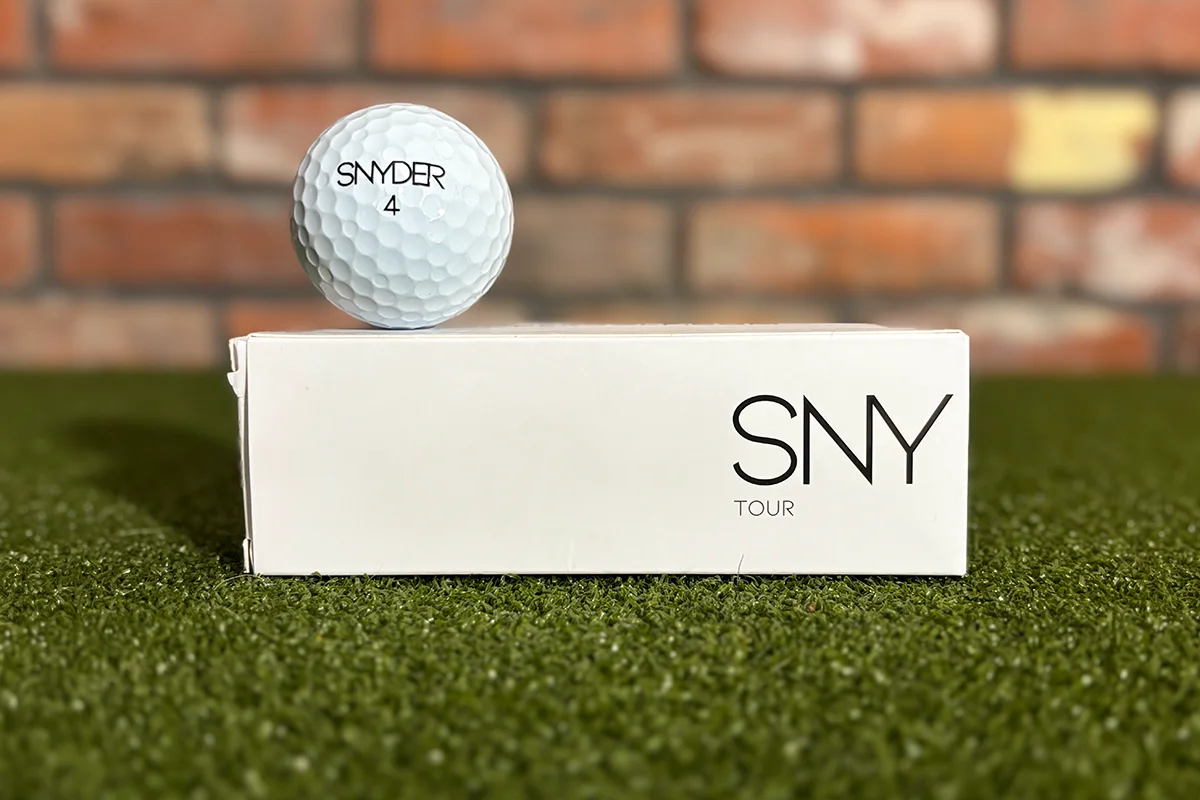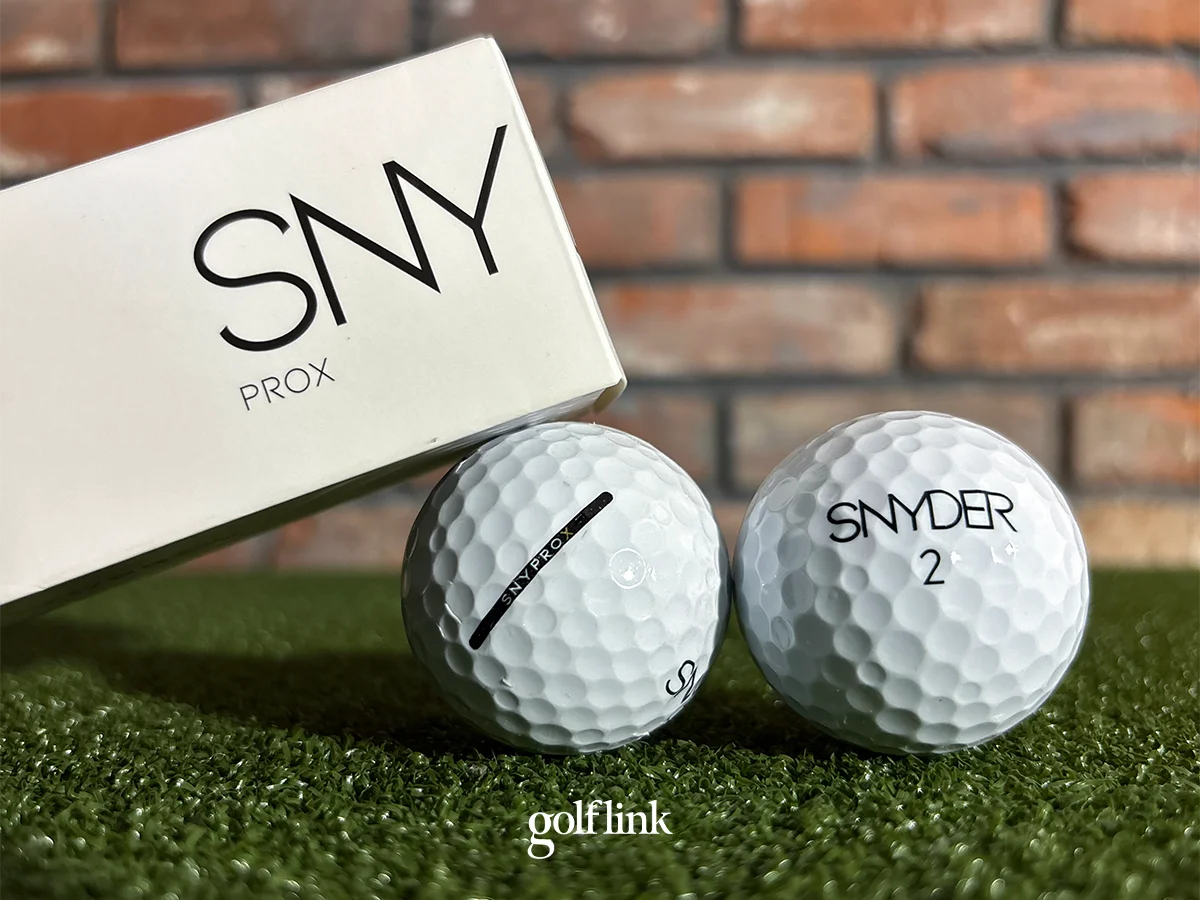
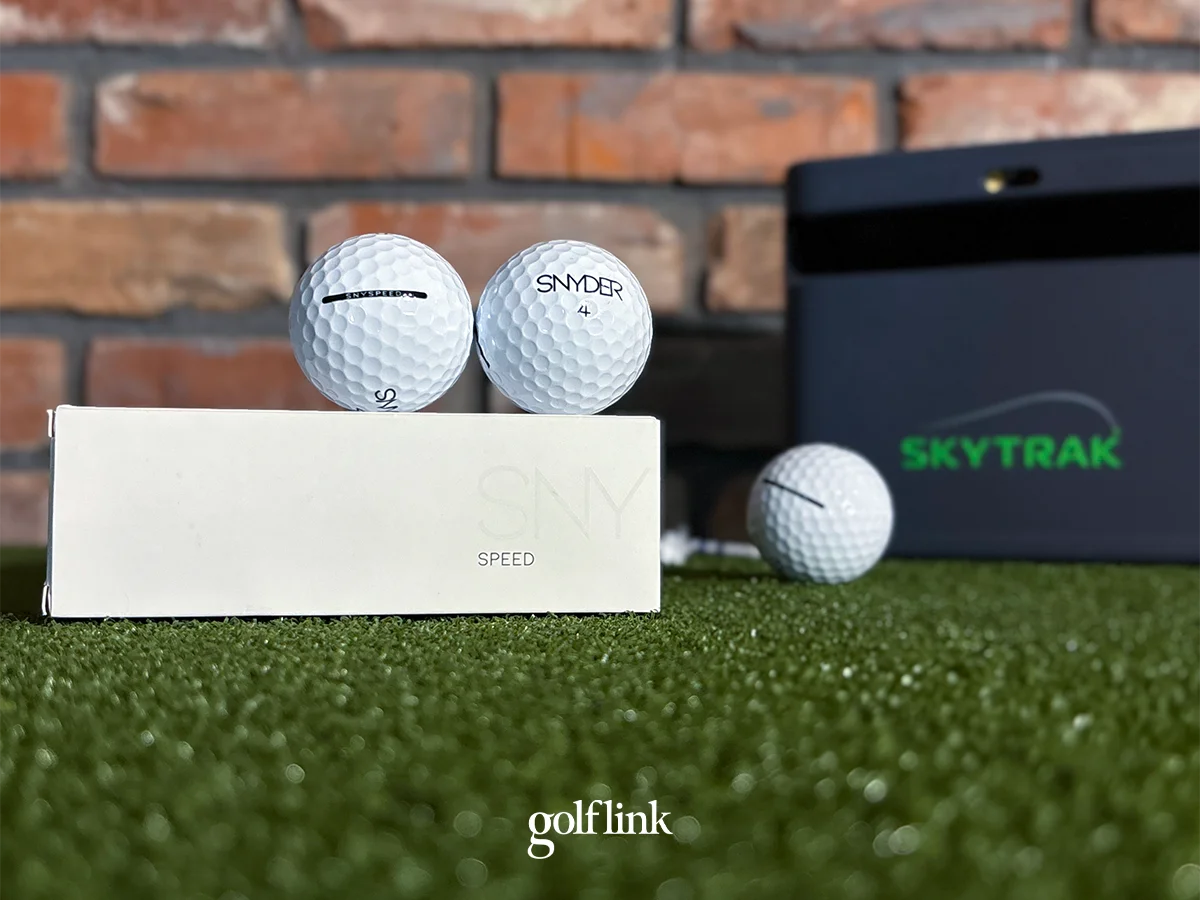
Snyder Speed is positioned as the distance specialist in the brand's six-ball lineup — a three-piece ball with a soft cover built to cut drag and boost ball speed off the tee. It’s supposed to be a forgiving ball meant to produce a straighter flight. Priced at $28 a dozen, it’s an enticing option for huge segment of players if that accuracy off the tee story holds up.
That’s a big if, so we tested it for ourselves. Here’s what we found.
How We Tested Snyder Speed
We put the Snyder Speed through our published golf ball testing protocols using the SkyTrak ST Max launch monitor. That means human swings under strict bands for swing speed, impact quality, and delivery dynamics.
To see performance from tee to green, we test driver, 7-iron, and 50-yard wedge shots with each ball.
We tested 43 golf balls in total for 2026 then translated the raw data into 1-10 scores in the categories that matter most to your game. That lets you easily see how each ball stacks up to the field.
See the complete list of every golf ball we've tested or dive into the full Snyder Speed test data here.
Snyder Speed Specs, Pricing & Performance
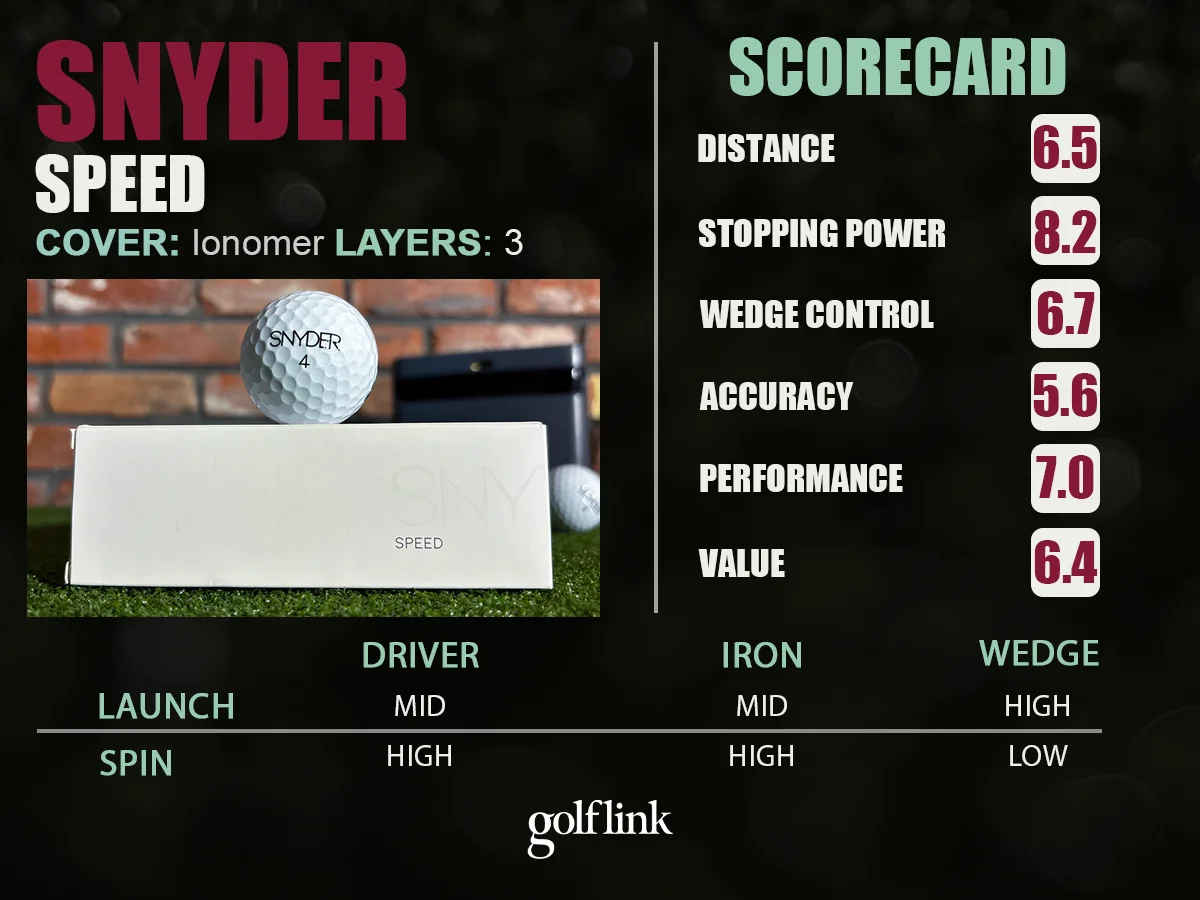
Cover: Ionomer (NEI)
Layers: 3-Piece
Price: $28/dozen
Snyder Speed produced a high-spin, mid-launch driver profile in our test, stayed high-spin through the 7-iron, and dropped to a low-spin, high-launch shape from 50 yards.
That's an unusual shape for this price tier. Most budget balls lean low-spin everywhere to keep things simple; Speed does the opposite off the tee and through the irons. That extra spin off the tee can benefit slower swing speeds and we saw it produce strong results from the iron game as well.
Shot | Spin | Launch |
Driver | High | Mid |
7-Iron | High | Mid |
50-Yard Shot | Low | High |
Distance: 6.5/10
Snyder Speed finished near the bottom – 37th of 43 – in our distance test, totaling 238.0 yards from 136.4 mph ball speed. Both of those numbers were a touch below our full field's average, and a low 22.0-yard apex didn’t do much to help Snyder Speed carry longer.
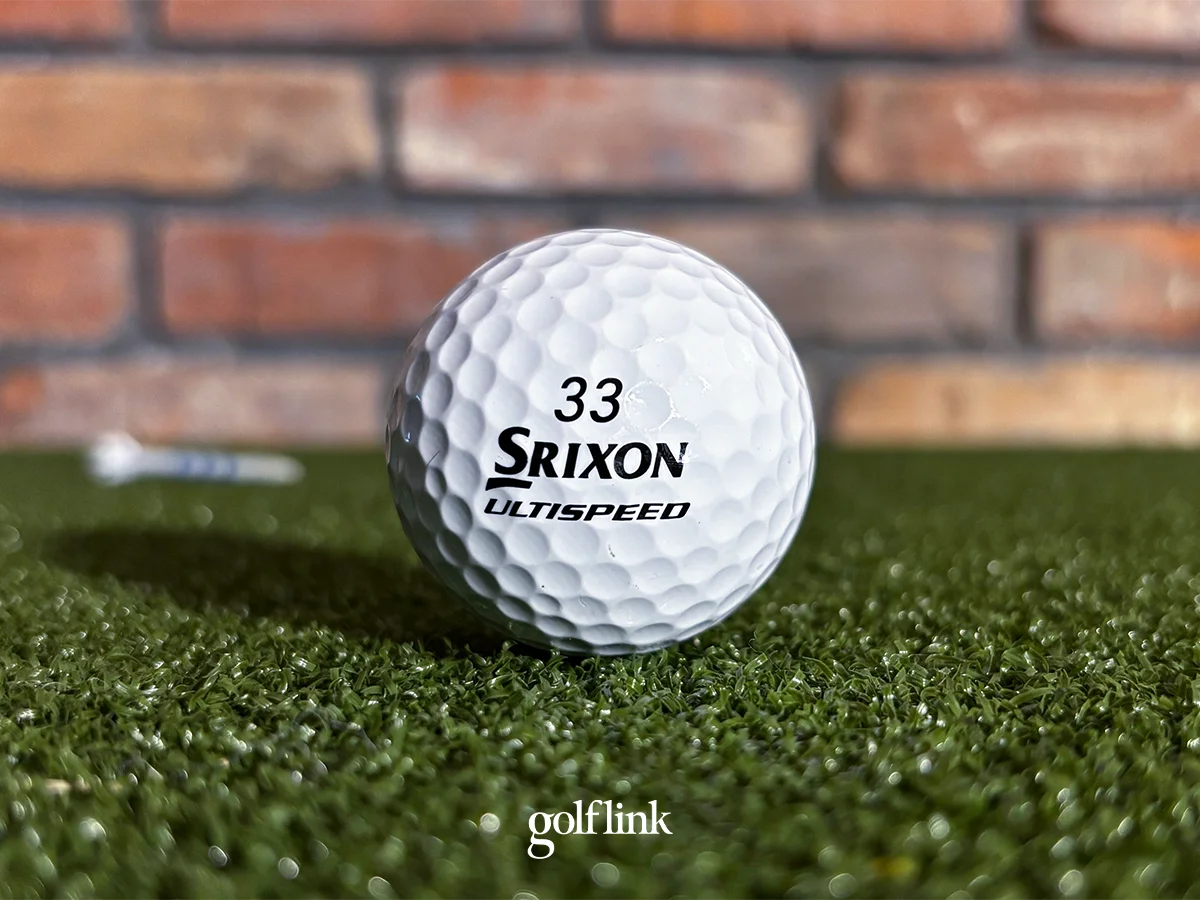
The dual-radius dimple pattern Snyder built this ball around is meant to add ball speed by cutting drag, and the ball speed number is respectable. It didn’t quite standout compared to the full field of balls we tested, but it was competitive against 3-piece ionomer-covered balls like Callaway ERC Soft (136.5 mph) and Srixon Ultispeed (136.5).
If distance was the one thing you were hoping this design would deliver, it came up short in our test, but proved it has the speed to reach greater distances under the right launch conditions.
Category | Snyder Speed |
Ball Speed (mph) | 136.4 |
Carry (yds) | 217.3 |
Total Distance (yds) | 238.0 |
Launch Angle | 13.8° |
Distance Score | 6.5 |
Stopping Power: 8.2/10
This is Snyder Speed's real strength. It finished 8th out of 43 balls in our stopping power test. In our 7-iron test it rolled out just 8.8 yards, which is competitive with some of the elite tour balls that we've measured, thanks in part to a steep 42.5-degree descent angle. Balls in this category aren’t known for what they provide in approach play, but Snyder Speed proved it can deliver from this part of the game.
Category | Snyder Speed |
7-Iron Spin (RPM) | 4,749 |
7-Iron Roll (yds) | 8.8 |
Descent Angle | 42.5° |
Stopping Power Score | 8.2 |
Wedge Control: 6.7/10
Snyder Speed took a clear step down from its iron performance when it came to our wedge control test. A 50-yard spin rate of just 4,238 RPM was among the lowest we recorded, and combined with 3.5 yards of rollout it produced considerably more run-out than the field's better-controlled balls.
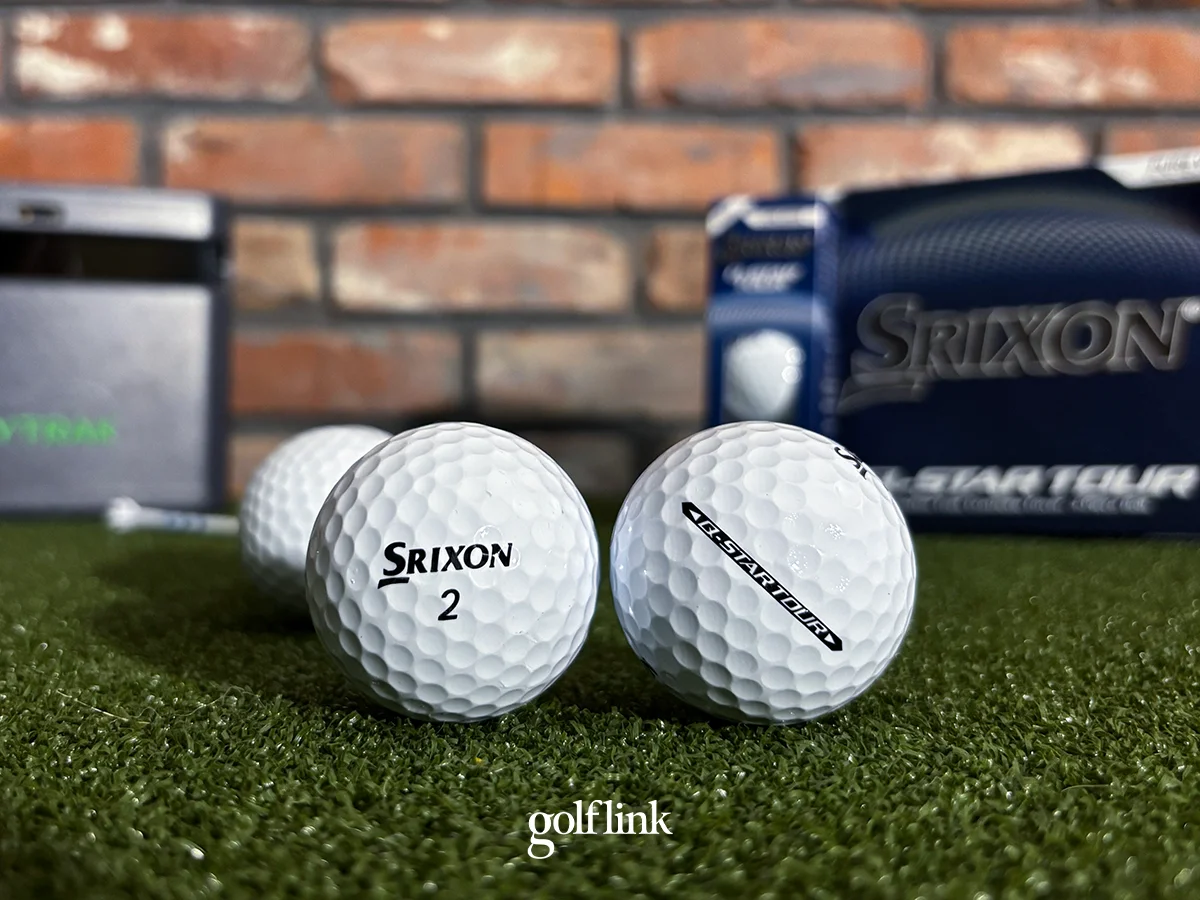
That's the typical tradeoff you’d expect when gaming an ionomer-covered ball, and it’s about the same as you can expect from other popular 3-piece ionomer covered balls like Callaway Supersoft (3.3 yards), Q-Star Ultispeed (3.3 yards), Vice Tour (3.4 yards) and Maxfli Revolution (3.4 yards).
Category | Snyder Speed |
50-Yard Spin (RPM) | 4,238 |
50-Yard Launch | 37.6° |
Wedge Control Score | 6.7 |
Accuracy: 5.6/10
This is where Snyder Speed's story doesn’t match our test. With 344 RPM of sidespin from our driver test, it was the highest of any ball in our entire field. That left it 15.0 yards offline.
Snyder markets Speed around a forgiving compression built for a straighter, more consistent flight. Our data didn't back that up off the tee. With the irons, we can see that engineering at work. It averaged just 4.7 yards offline in our 7-iron accuracy test, but the driver result was weak enough to pull the overall accuracy score to the bottom of our entire test.
Category | Snyder Speed |
Driver Offlin (yds) | 15.0 |
Driver Sidespin (RPM) | 344 |
7-Iron Offline (yds) | 4.7 |
7-Iron Sidespin (RPM) | 184 |
Accuracy Score | 5.6 |
Value: 6.4/10
At $29 a dozen in bulk — the price this ball carried when we scored it — Snyder Speed's value score of 6.4, 36th of 43, reflects a ball that doesn't actually save you much money compared to its peers, yet asks you to accept the worst accuracy result we've recorded.
Snyder has since dropped this ball to a flat $28 a dozen with no bulk minimum required. We haven't recalculated the score to reflect that, since one price change shouldn't ripple through the value rankings of the rest of our 43-ball comparison, but the $1 lower price doesn’t do much to shift the value.
Who Is the Snyder Speed For?
Snyder Speed is for the player whose driver swing is already reliable and who wants a budget ball that actually stops on approach shots, which is rare at this price. If your iron play is the strength of your game and you're not asking your ball to save a shaky driver swing, Snyder Speed can work.