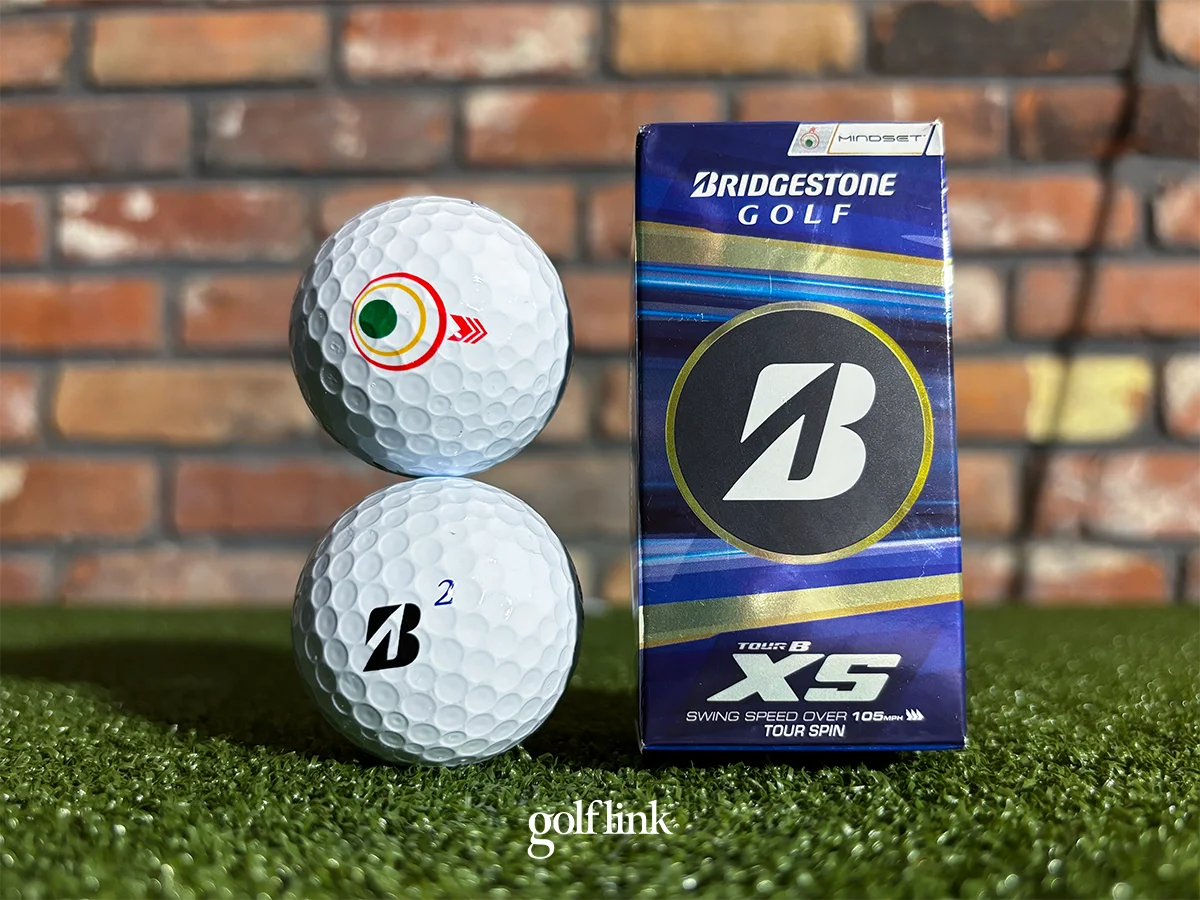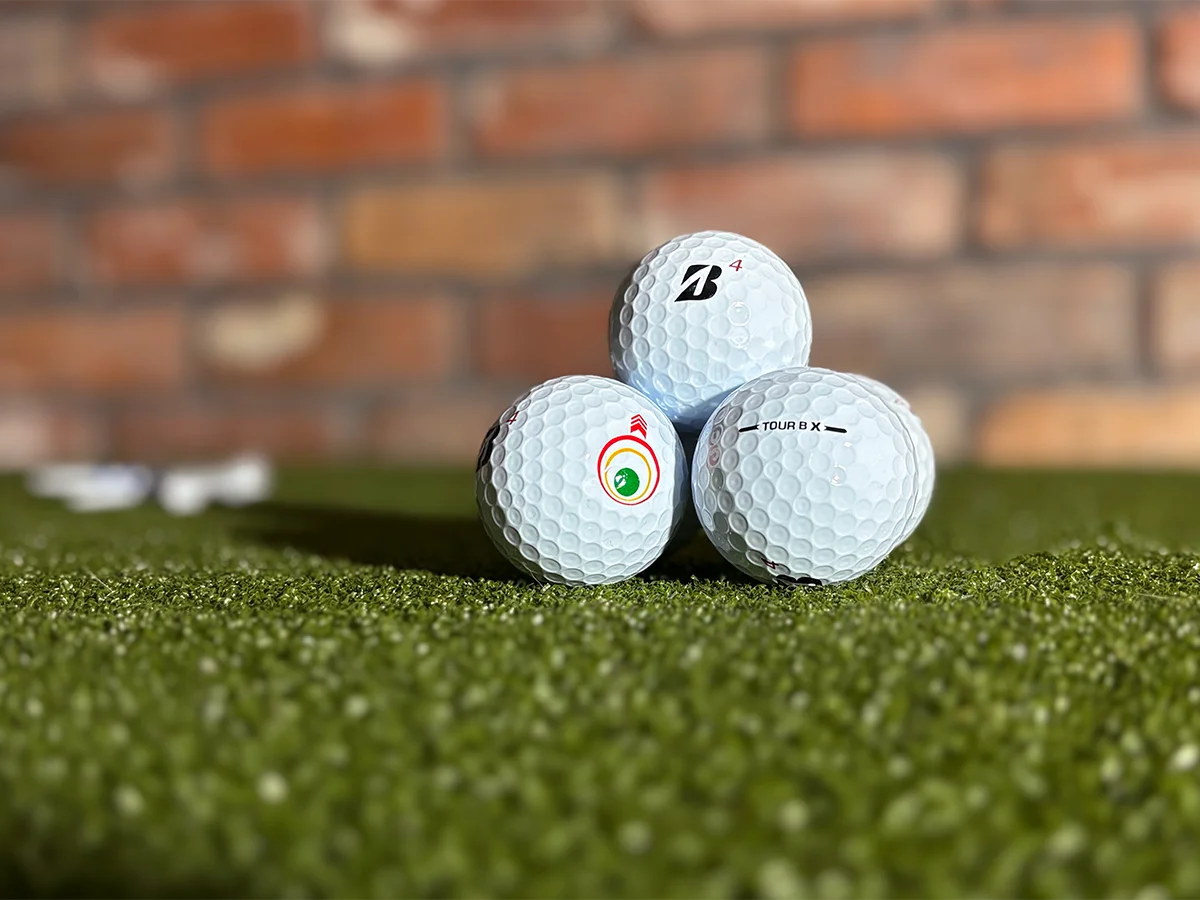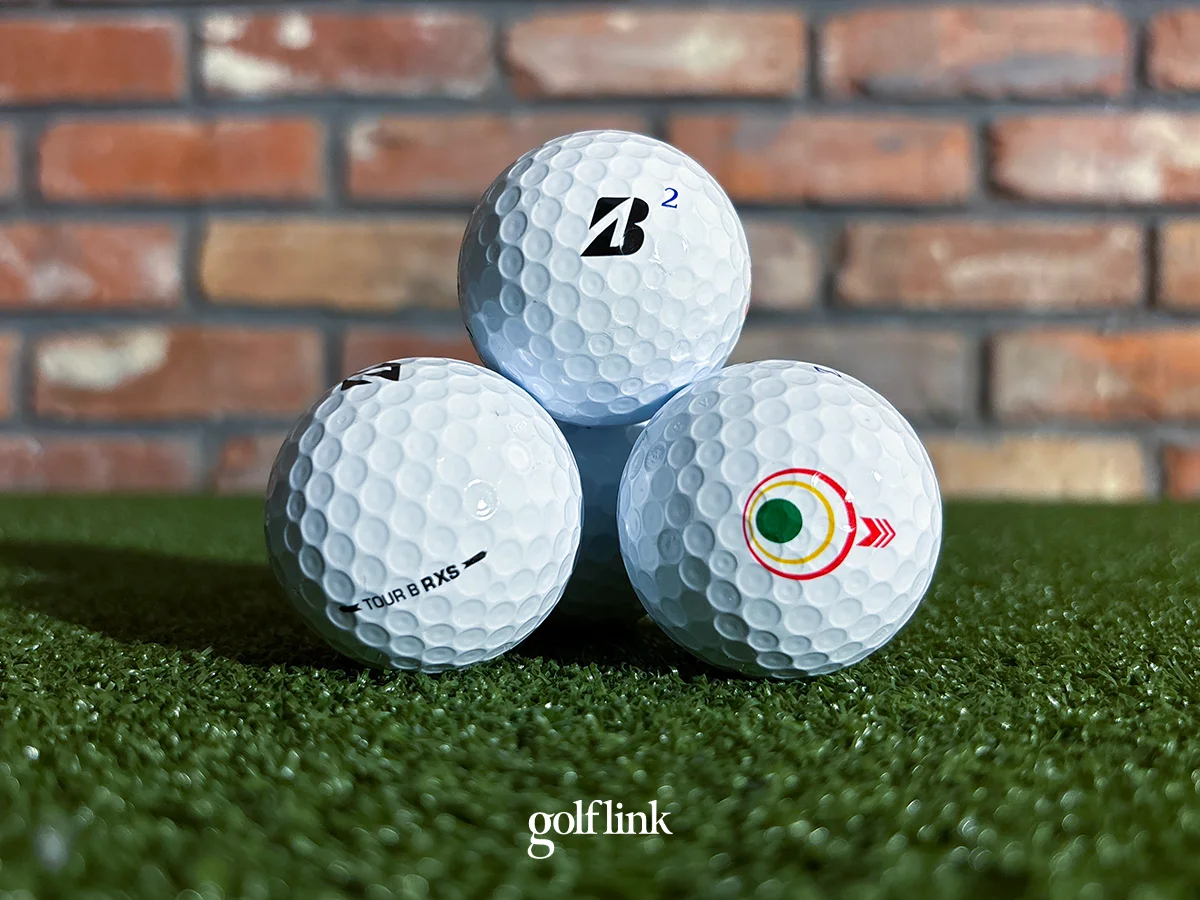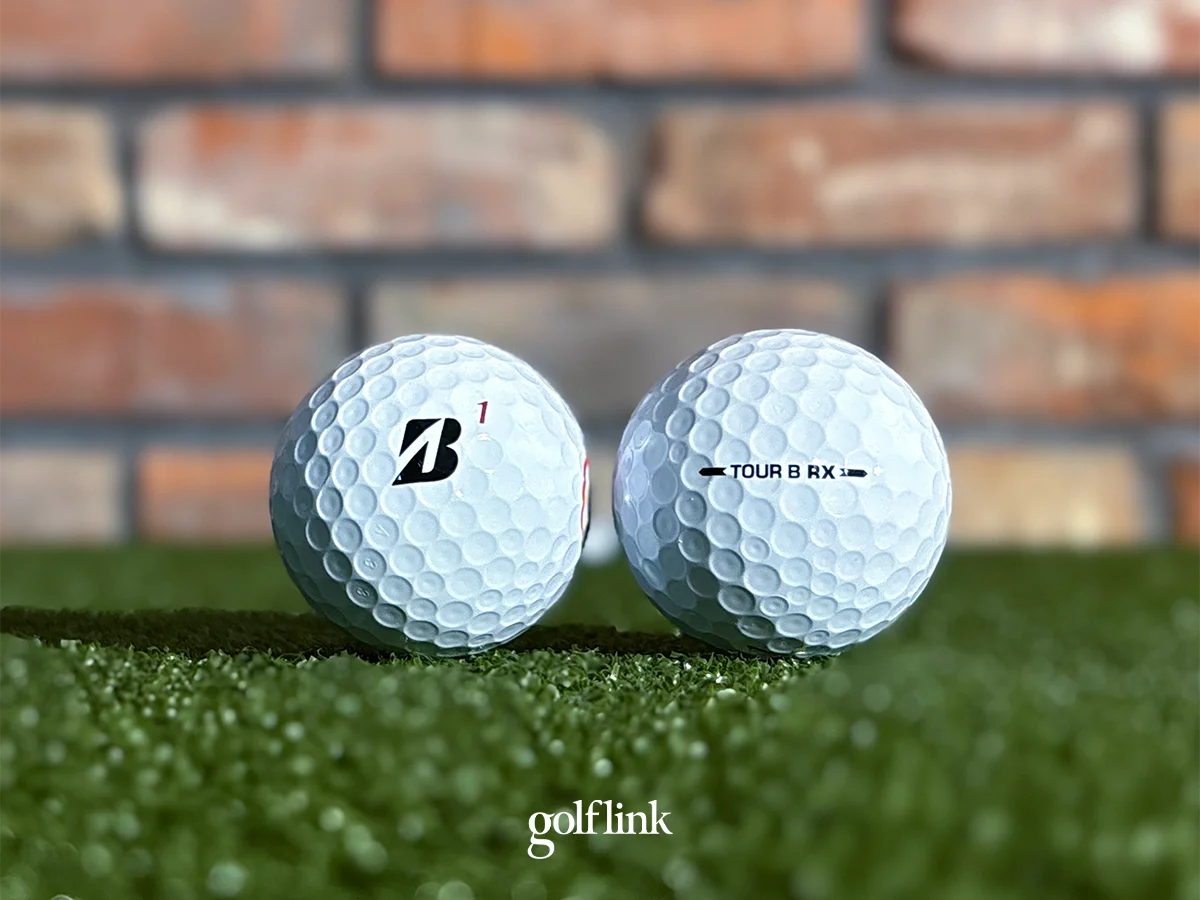
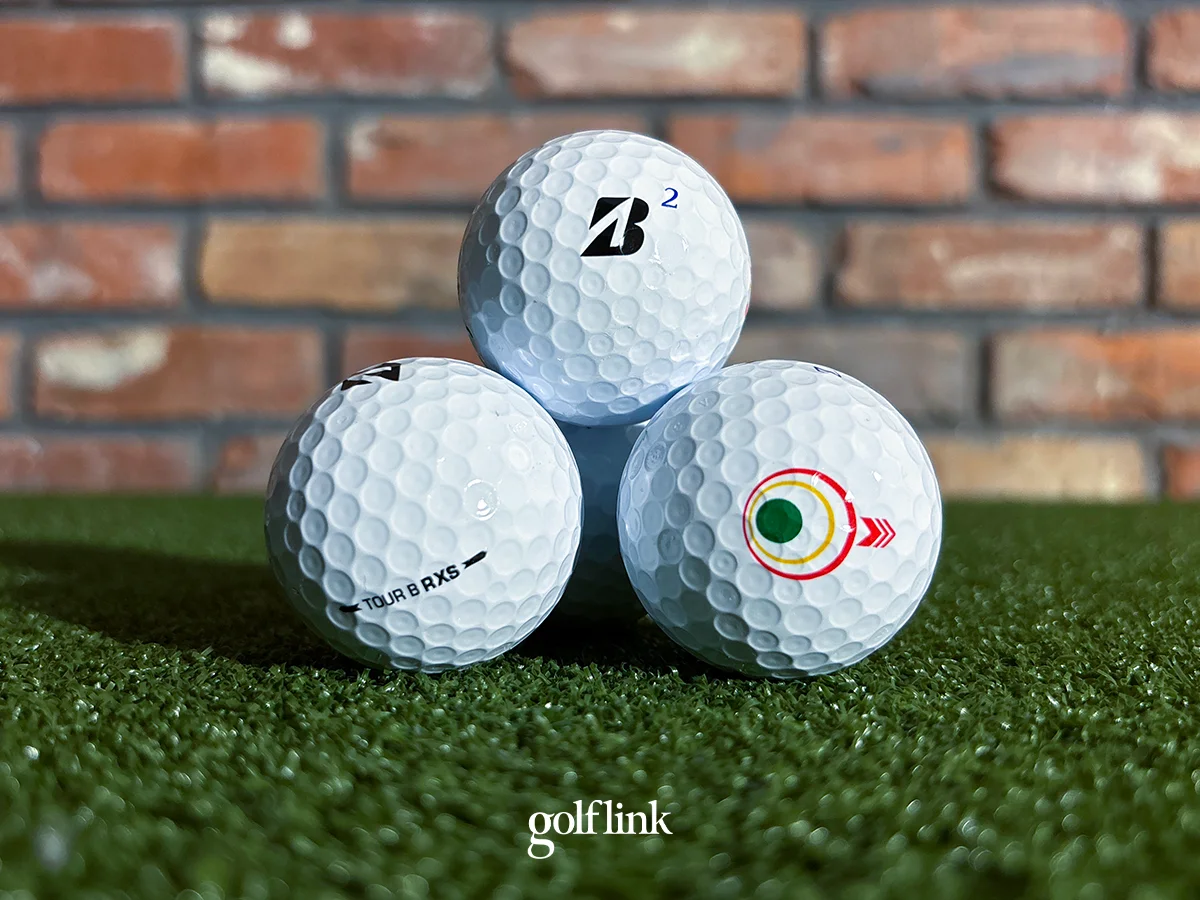
You might look at the Bridgestone Tour B lineup and think the cat walked on the keyboard the moment these four balls were named. X, RX, RXS, and XS aren’t exactly intuitive names for golf balls.
But there’s a method to the madness. Think of that naming convention as a 2x2 grid. In the top half there are two balls built for players with swing speeds over 105 mph, and the bottom half has two options for players who don’t swing it that fast.
Then there are two columns for feel. The left column features two balls with firm feel, and the right column has two options with soft feel.
That’s why what looks like alphabet soup to the untrained eye is actually a two-question fitting system to find the right Tour B option. How fast is your swing, and what’s your feel preference?
The Tour B RXS is the below-105 swing speed, soft-feeling model in the lineup. The "soft" half of that column doesn't just mean a cushier feel, Bridgestone also tuned RXS to spin more around the greens, while RX leans toward distance instead.
We ran Tour B RXS through our standard golf ball testing protocols, and the results were interesting. Elite in one category, dead last in another. Find out where it hit the mark, where it comes up short, and if it could work for your game.
How We Tested the Bridgestone Tour B RXS
We put the Bridgestone Tour B RXS through our published golf ball testing protocols using the SkyTrak ST Max launch monitor. That means human swings under strict bands for swing speed, impact quality, and delivery dynamics.
To see performance from tee to green, we test driver, 7-iron, and 50-yard wedge shots with each ball.
We tested 43 golf balls in total for 2026 then translated the raw data into 1-10 scores in the categories that matter most to your game. That lets you easily see how each ball stacks up to the field.
See the complete list of every golf ball we've tested or dive into the full Bridgestone Tour B RXS test data here.
Bridgestone Tour B RXS Specs, Pricing & Performance
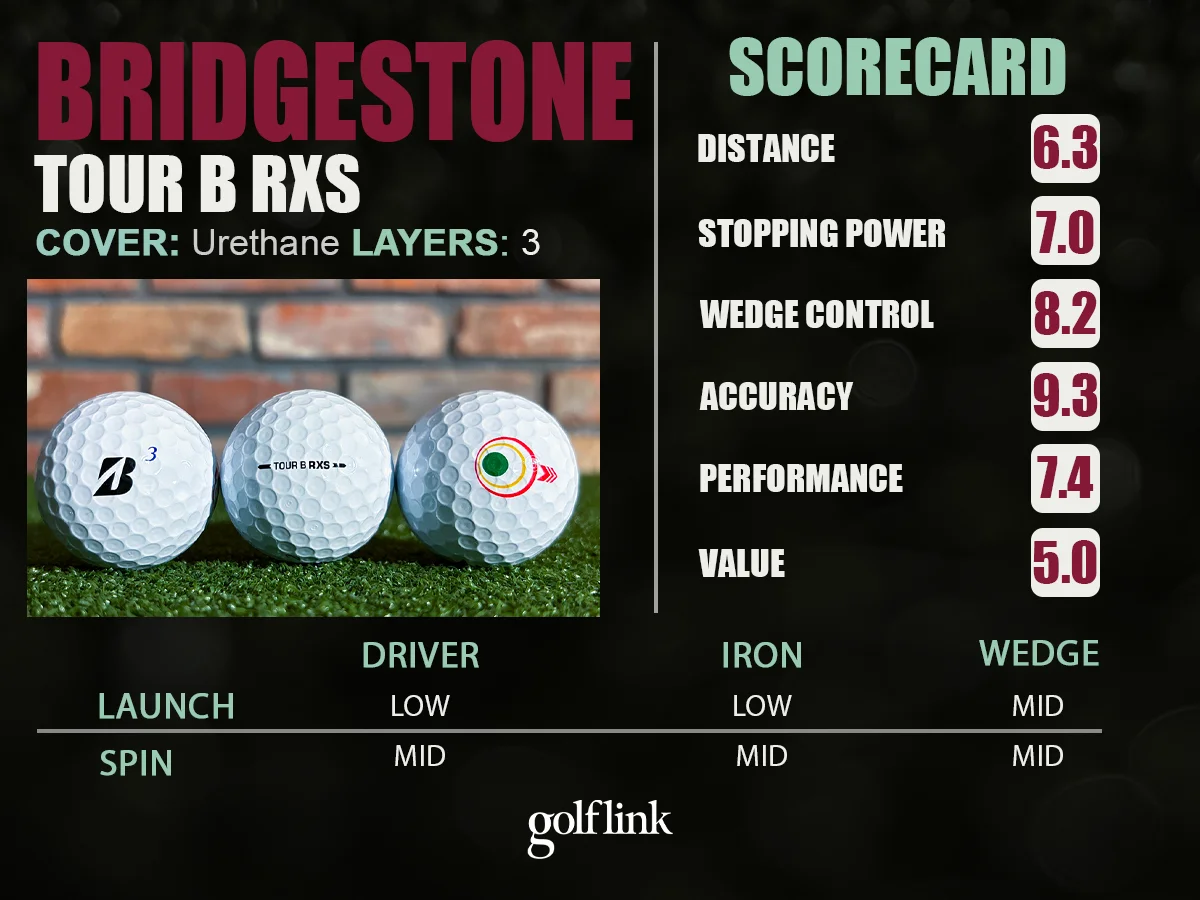
Tour B RXS ran a mid-spin, low-launch profile in both of our full-swing tests, driver and 7-iron, and a mid-spin, mid-launch profile from 50 yards.
That's a fairly modest spin profile everywhere in the bag and Tour B RXS didn’t stray from its sibling Tour B RX’s spin numbers too far in any of the three tests. The -206 RPM spin difference in our 50-yard test was the largest spin gap between the two.
Shot | Spin | Launch |
Driver | Mid | Low |
7-Iron | Mid | Low |
50-Yard | Mid | Mid |
Fast Facts
Cover: Urethane
Layers: 3-Piece
Price: $54/dozen
Distance: 6.3/10
Bridgestone touts the 2026 Tour B lineup for a boost of ball speed. And even though Tour B RXS finished near the bottom of our distance test, Bridgestone’s ball speed promise checks out.
Tour B RXS’s 136.3 mph in our driver test was less than 1 mph slower than our field average, but a low launch and apex prevented it from turning that ball speed into distance.
For example, Callaway ERC Soft clocked in at virtually the same ball speed (136.5 mph for ERC Soft, 136.3 mph for Tour B RXS), but ERC Soft launched almost four degrees higher (16.6° vs 12.8°), which led to nearly 14 more yards of carry (227.9 yards vs. 214.1 yards).
The translation? If you launch the ball low with driver, then don’t expect Tour B RXS to do you any favors. But if you already launch it high, then Tour B RXS could turn out to be much longer for you than what we saw in our testing.
Category | Tour B RXS |
Ball Speed (MPH) | 136.3 |
Carry (yds) | 214.1 |
Total Distance (yds) | 237.1 |
Launch Angle | 12.8° |
Stopping Power: 7.0/10
Tour B RXS finished 28th of 43 balls in our stopping power test — a below-average, middle-of-the-pack result. Rollout on our 7-iron test was 11.1 yards, with a 40.0-degree descent angle and 22.1-yard apex.
That's a modest number for a ball built around extra spin, and it's a little surprising given Tour B RXS’s position. If you play courses that reward extra roll into the green, or you simply don't need your approach shots to stop on a dime, that's not an issue. If you need your ball to check up hard on firm greens, this isn't where RXS earns its reputation.
Category | Tour B RXS |
7-Iron Spin (RPM) | 4,431 |
7-Iron Roll (yds) | 11.1 |
Descent Angle | 40.4° |
Wedge Control: 8.2/10
On paper, 8.2 sounds like a real strength, and in practical terms, it basically is. That score actually ranks 29th of 43 in our field, but the raw data puts that into perspective: RXS rolled out 2.8 yards from 50 yards, compared to roughly 2.1 to 2.4 yards for most of the balls sitting just ahead of it in the rankings. That's a gap of a foot or two of extra roll, tops.
For a 5-to-20 handicap weekend player, that's not a difference you're likely going to feel on the course. The real separation in this category happens at the very top of the field, among the handful of balls built specifically to check up hardest; everything below that top tier, RXS included, is bunched close enough together that the on-course gap is minimal. If greenside spin was the specific reason you’re drawn to a ball, RXS isn’t the one you’ll choose, but overall it’s actual performance holds up better than its rank suggests.
Category | Tour B RXS |
50-Yard Spin (RPM) | 6,421 |
50-Yard Launch | 33.0° |
Accuracy: 9.3/10
Accuracy is where Tour B RXS – and most Bridgestone balls in general – separates itself. It finished 4th of 43 balls in our accuracy test, one of the best results in our entire field. Driver dispersion averaged 3.8 yards offline with just 117 RPM of sidespin. Iron accuracy was just as good: 5.3 yards offline with just 53 RPM of sidespin.
That's a strong showing, making accuracy the area of RXS's profile that fully lives up to the hype. If dispersion off the tee and with your irons is the number you care about most, this is one of the best options we've tested.
Category | Tour B RXS |
Driver Offline (yds) | 3.8 |
Driver Sidespin (RPM) | 118 |
7-Iron Offline (yds) | 5.3 |
7-Iron Sidespin (RPM) | 53 |
Value: 5.0/10
Our test revealed a value problem for Tour B RXS. It’s priced with its tour-ball peers, but poor performances in our testing in distance and stopping power led to a weak overall performance score. And of course, weak performance and premium price is the opposite of value. Hence, the 5.0 value score for Tour B RXS.
The case for it isn't really a value argument. It's an accuracy-and-feel argument. If dispersion is your single biggest priority and you want the softest feel in Bridgestone's tourlineup to go with it, that's a real, specific reason to buy this ball. If you're shopping on the numbers with no specific priority, this is a hard ball to recommend based on value.
Who Is the Bridgestone Tour B RXS For?
Tour B RXS is for the player who has already decided that dispersion matters more than anything else in their bag, and who wants the softest-feeling ball Bridgestone makes to go with it. If you hit the ball too high naturally, Tour B RXS could lower that ball flight and squeeze more distance out of your swing.
If you're shopping on value, distance, or greenside spin specifically, the data points you elsewhere, including to RXS's own sibling. But for the accuracy-first player who's already bought into the softer Tour B feel, this ball delivers on the one thing it's actually built to do.